Table Of the Content
The gaming industry has transformed from a niche entertainment sector into a global powerhouse worth billions of dollars. From mobile games and console titles to virtual reality experiences, gaming companies are constantly looking for talented professionals who can create immersive characters, environments, and visual effects.
If you are passionate about creativity, storytelling, and technology, enrolling in a 3D Animation Course can be your first step toward a rewarding career in gaming. Today, game studios need skilled artists who can bring ideas to life through stunning visuals and engaging gameplay experiences. Whether you dream of designing characters, creating realistic environments, or working on blockbuster games, professional training can help you gain the skills employers are seeking.
In this blog, we will explore how a Game Design Course and animation training can prepare you for a successful future in the gaming industry, the skills you will learn, career opportunities available, and how to choose the right course for your goals.
Why the Gaming Industry Needs 3D Animation Professionals
Gaming has evolved significantly over the last decade. Modern games rely heavily on realistic graphics, cinematic storytelling, and immersive gameplay mechanics. This demand has increased the need for skilled 3D artists and animators.
According to industry reports from organizations such as the Entertainment Software Association (ESA) and Newzoo, the global gaming market continues to grow, creating thousands of job opportunities worldwide.
A game’s success often depends on its visual appeal. Characters must move naturally, environments need to look realistic, and special effects should enhance the player’s experience. This is where trained 3D animation professionals become essential.
Key Areas Where 3D Animators Contribute
- Character Modeling
- Character Animation
- Environment Design
- Visual Effects (VFX)
- Cinematic Cutscenes
- Motion Capture Integration
- Asset Creation for Games
Without skilled animators, even the most innovative game concepts may fail to engage players.
What You Learn in a 3D Animation Course
A 3D Animation Course provides students with the technical and creative skills needed to create high-quality digital content for games, films, and interactive media. From character modeling to animation and visual effects, the course helps learners build a strong foundation for a successful career in the gaming industry.
A professional 3D Animation Course provides a structured learning path that combines creativity with technical expertise.
1. 3D Modeling
Students learn how to create characters, vehicles, weapons, buildings, and game environments using industry-standard software.
Skills Covered:
- Polygon modeling
- Hard-surface modeling
- Organic modeling
- Asset optimization
These skills are crucial for creating game-ready assets.
2. Texturing and Lighting
Texturing adds realism to models by applying colors, materials, and surface details.
Students learn:
- UV mapping
- Material creation
- Texture painting
- Lighting techniques
Good texturing and lighting can dramatically improve the visual quality of a game.
3. Rigging and Animation
Rigging involves creating a digital skeleton that allows characters to move naturally.
Animation training includes:
- Walk cycles
- Character movements
- Facial expressions
- Action sequences
These skills help create believable and engaging game characters.
4. Visual Effects (VFX)
Games often feature explosions, magic effects, weather systems, and particle simulations.
Students learn how to create:
- Fire effects
- Smoke simulations
- Water effects
- Environmental effects
These elements add excitement and realism to gameplay.
5. Game Engine Integration
Modern animation courses introduce students to game engines such as:
- Unity
- Unreal Engine
Learning game engines helps students understand how animated assets function inside actual games.
How a Game Design Course Complements Animation Skills
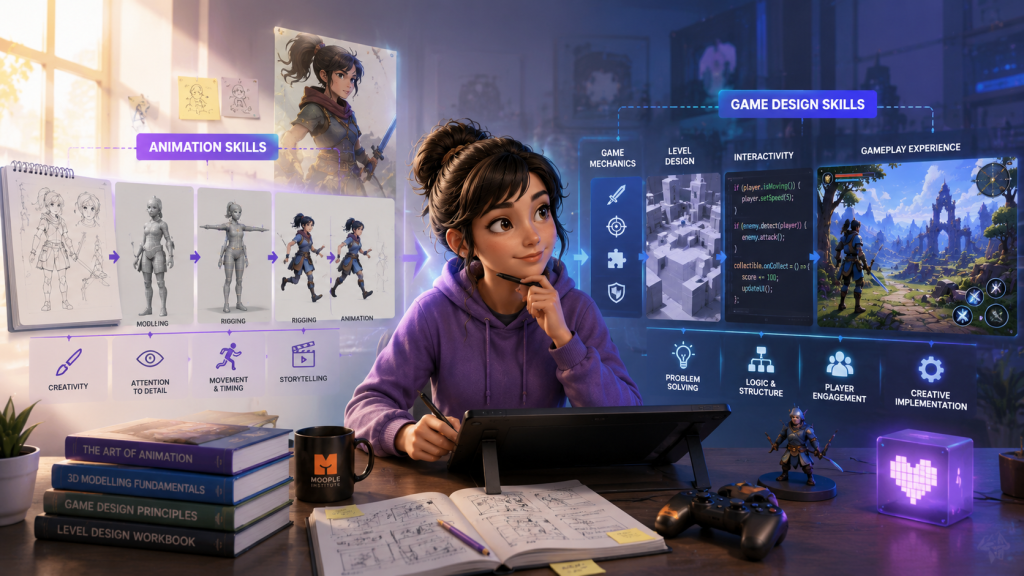
While animation focuses on creating visual elements, game design focuses on developing engaging gameplay experiences. A Game Design Course helps students understand game mechanics, storytelling, and level design, making them more versatile professionals who can contribute to multiple aspects of game development.
Game design training helps students understand:
- Gameplay mechanics
- Level design
- User experience (UX)
- Storytelling
- Player psychology
- Game balancing
When animation and game design skills are combined, students become more versatile professionals who can contribute to multiple stages of game development.
This combination makes candidates highly attractive to gaming studios and development companies.
Career Opportunities After Completing a 3D Animation Course
Completing a 3D Animation Course opens the door to a wide range of exciting career opportunities in gaming and digital entertainment. With the right skills and portfolio, graduates can work in game studios, animation companies, advertising agencies, and multimedia production houses.
The gaming industry offers diverse career paths for skilled professionals.
1. Game Animator
Game animators create character movements, combat sequences, and interactive animations.
Responsibilities:
- Character movement creation
- Animation testing
- Motion capture editing
2. 3D Modeler
3D modelers build game assets such as characters, environments, and props.
Responsibilities:
- Asset creation
- High-poly and low-poly modeling
- Optimization for game engines
3. Environment Artist
Environment artists design the worlds players explore.
Responsibilities:
- Terrain creation
- Environmental storytelling
- World-building
4. Character Artist
Character artists focus on creating detailed and memorable game characters.
Responsibilities:
- Character design
- Sculpting
- Texturing
5. Technical Artist
Technical artists bridge the gap between art and programming.
Responsibilities:
- Pipeline development
- Shader creation
- Performance optimization
6. Game Designer
After completing a Best Game Design Course, students may pursue roles involving gameplay creation and player engagement.
Responsibilities:
- Designing game systems
- Creating levels
- Balancing gameplay mechanics
Benefits of Pursuing a 3D Animation Career in Gaming
A 3D Animation Career offers the perfect blend of creativity and technology. It provides opportunities to work on innovative projects, earn competitive salaries, and contribute to the development of engaging gaming experiences enjoyed by players worldwide.
A 3D Animation Career offers several advantages beyond creative satisfaction.
High Industry Demand
Gaming companies, animation studios, advertising agencies, and production houses regularly hire skilled 3D professionals.
Global Career Opportunities
Gaming is a global industry. Talented animators can work with companies across different countries through remote and freelance opportunities.
Competitive Salaries
Professionals with strong portfolios and technical skills often enjoy attractive salary packages and career growth opportunities.
Creative Freedom
Animation allows professionals to transform ideas into visually engaging experiences that entertain millions of players worldwide.
Continuous Learning
The industry constantly evolves with new technologies such as:
- Virtual Reality (VR)
- Augmented Reality (AR)
- Artificial Intelligence (AI)
- Real-Time Rendering
This creates endless opportunities for growth and specialization.
Essential Skills Required to Succeed in Gaming Animation
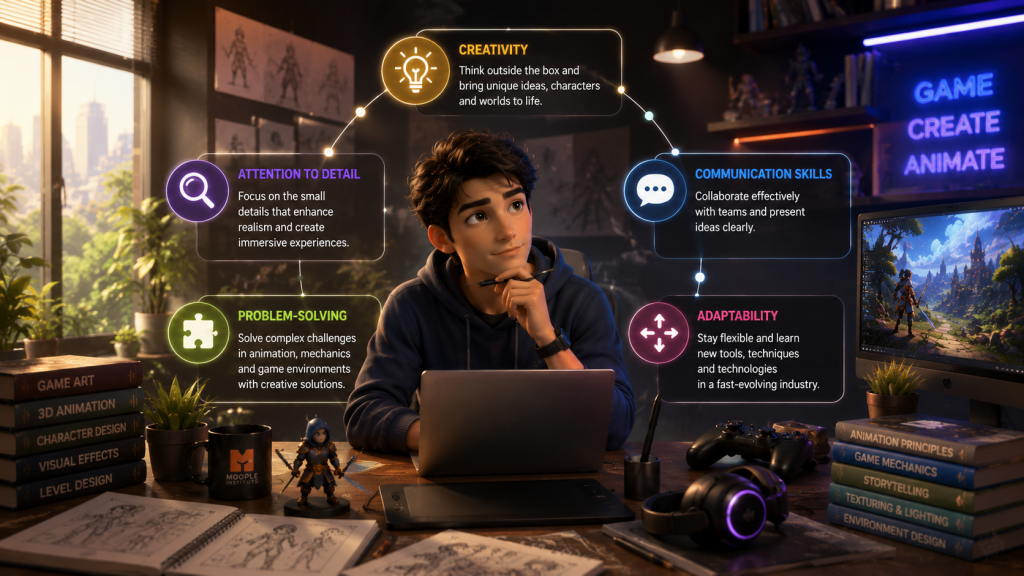
Success in gaming animation requires a combination of artistic talent, technical expertise, and problem-solving abilities. Developing these skills helps professionals create high-quality animations while adapting to the evolving demands of the gaming industry.
Success in gaming requires more than technical knowledge.
Creativity
Strong imagination helps create unique characters and game worlds.
Attention to Detail
Small details often make the difference between average and exceptional game assets.
Problem-Solving
Animators frequently face technical challenges that require innovative solutions.
Communication Skills
Game development is collaborative. Effective communication improves teamwork and project outcomes.
Adaptability
Learning new software and industry trends is essential for long-term success.
Why Students Are Choosing a 3D Animation Course in Kolkata
The popularity of a 3D Animation Course in Kolkata has grown significantly due to the city’s expanding digital media and gaming sectors. Students are increasingly choosing professional training programs that offer industry-focused learning, practical experience, and strong career opportunities.
The demand for a quality 3D Animation Course in Kolkata has increased significantly due to the city’s growing digital media and gaming ecosystem.
Kolkata offers:
- Industry-focused training programs
- Affordable education options
- Access to experienced mentors
- Growing placement opportunities
- Exposure to real-world projects
Many institute‘s now provide practical learning environments where students can build professional portfolios and gain hands-on experience using industry-standard software.
How to Choose the Best 3D Animation Course for Gaming
Selecting the Best 3D Animation Course is a crucial step for aspiring gaming professionals. The right program should provide hands-on training, industry-relevant software knowledge, experienced faculty, and opportunities to build a strong portfolio that attracts employers.
Selecting the Best 3D Animation Course is one of the most important decisions for aspiring gaming professionals.
Consider the following factors:
Industry-Relevant Curriculum
Choose a course covering:
- Modeling
- Texturing
- Rigging
- Animation
- Game engines
Experienced Faculty
Learn from professionals with real industry experience.
Portfolio Development
A strong portfolio often matters more than academic qualifications when applying for gaming jobs.
Placement Assistance
Look for institutes that provide internship and placement support.
Practical Learning
Hands-on projects help students gain confidence and industry exposure.
Updated Software Training
Ensure the course includes tools used by leading gaming studios.
Industry Trends Shaping the Future of Gaming Careers
The gaming industry is constantly evolving with advancements in technology such as virtual reality, artificial intelligence, and real-time rendering. Understanding these emerging trends can help students prepare for future opportunities and stay competitive in the industry.
Emerging technologies are creating new opportunities for animation professionals:
- AI-powered game development
- Metaverse experiences
- Real-time rendering
- Virtual production
- Cloud gaming
- Mixed reality experiences
Students who invest in animation and game design skills today will be better prepared for tomorrow’s opportunities.
For industry insights and gaming market trends, readers can explore authoritative resources such as the Entertainment Software Association (ESA) and Newzoo, which regularly publish reports on gaming growth and employment trends.
FAQs
1. Is a 3D Animation Course good for a gaming career?
Yes. A 3D Animation Course teaches essential skills such as modeling, rigging, texturing, and animation, which are highly valued in the gaming industry.
2. What jobs can I get after completing a 3D Animation Course?
You can work as a Game Animator, 3D Modeler, Character Artist, Environment Artist, Technical Artist, or Visual Effects Artist.
3. Do I need coding knowledge for gaming animation?
No. Basic coding knowledge can be helpful, but most animation roles focus on artistic and technical design skills rather than programming.
4. What is the difference between a 3D Animation Course and a Game Design Course?
A 3D Animation Course focuses on creating visual assets and animations, while a Game Design Course focuses on gameplay mechanics, level design, and player experience.
5. How do I choose the best 3D animation course?
Look for industry-relevant curriculum, experienced faculty, practical projects, portfolio development opportunities, updated software training, and placement support.
Conclusion
The gaming industry is growing rapidly, creating exciting opportunities for creative and technology-driven professionals. A professional 3D Animation Course equips students with the technical skills, artistic knowledge, and practical experience needed to thrive in game development. When combined with a Game Design Course, students gain a broader understanding of how games are created, making them valuable assets to employers.
Whether your goal is to become a game animator, character artist, environment designer, or game designer, investing in the right training can significantly accelerate your career growth.
If you’re ready to turn your passion for gaming into a profession, now is the perfect time to enroll in a quality animation program, build a strong portfolio, and start your journey toward a successful career in the gaming industry.
Students who have interested in learning more about professional animation training can explore this: 3D Animation Institute in Kolkata.