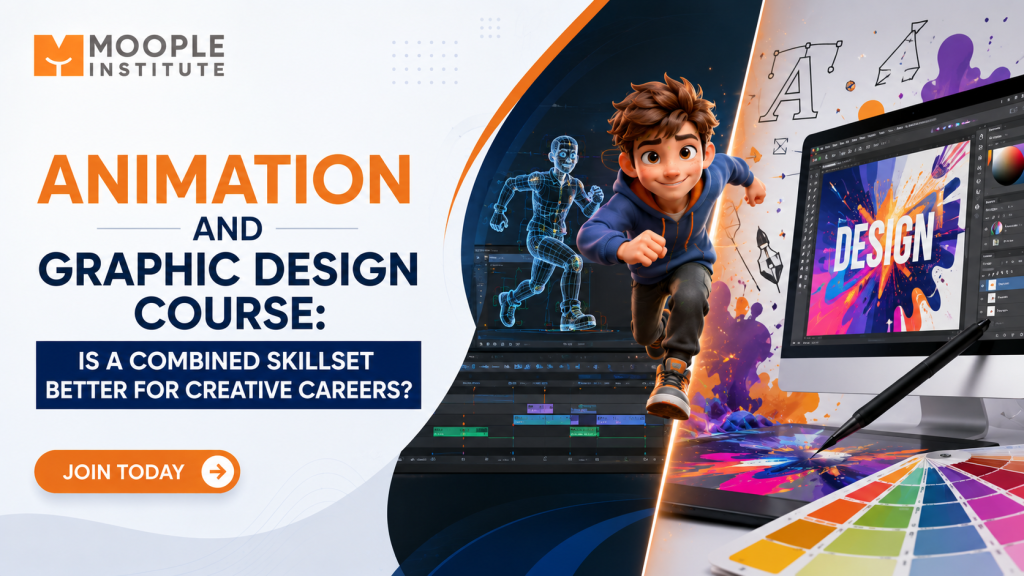
If you’ve been researching a career in visual media, you’ve probably noticed that job listings rarely ask for just one skill anymore. A studio hiring a junior animator often expects basic layout and typography sense. A brand hiring a graphic designer often wants someone comfortable with motion for social reels. This overlap is exactly why so many students now search for an animation and graphic design course instead of picking one discipline and hoping it’s enough.
But is combining the two actually the smarter move, or does it water down your skills and make you a “jack of all trades, master of none”? This is a genuine dilemma, not a marketing question, and the honest answer depends on what kind of creative career you’re aiming for.
In this guide, we’ll break down what a combined course actually teaches, how it compares to specialising in one field, what employers in Kolkata and beyond are really looking for, and how to avoid the mistakes that waste students’ time and money. By the end, you’ll have a clear, practical answer for your own situation — not a generic sales pitch.
Table of Contents
What Is an Animation and Graphic Design Course?
An animation and graphic design course is a training program that teaches both static visual communication (logos, layouts, branding, print and digital design) and moving visual storytelling (2D/3D animation, motion graphics, character movement) under one structured curriculum. Instead of learning Illustrator and Photoshop in isolation, students also pick up tools like After Effects, Toon Boom, or Blender, so design principles and motion principles reinforce each other from day one.
The reason this combination has grown popular isn’t just convenience. Design and animation share a common foundation — colour theory, composition, typography, and visual hierarchy apply equally whether you’re building a static Instagram post or a five-second animated intro. Studios have picked up on this overlap too, which is part of why hybrid training has moved from “nice to have” to a genuinely practical choice for students entering the field today.
Why the Industry Is Rewarding Combined Skillsets
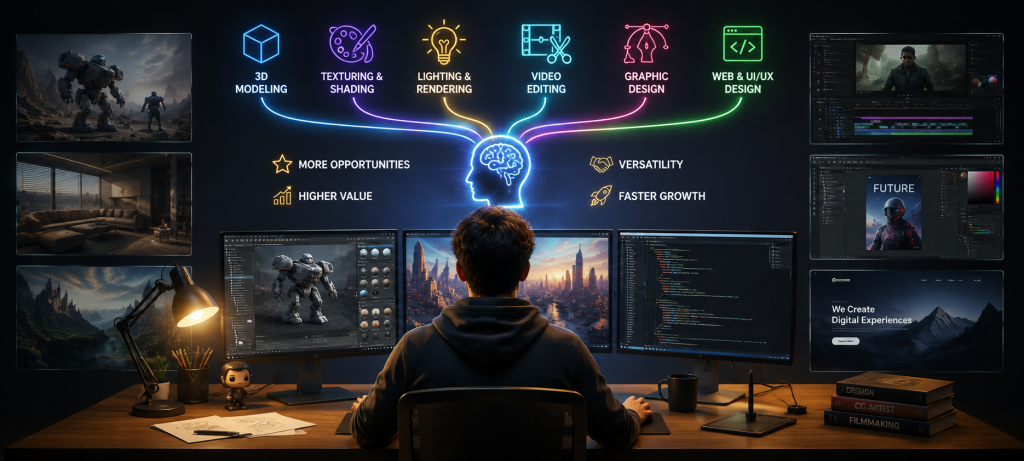
India’s animation, VFX, and post-production segment is projected to grow at roughly 10% CAGR, from around Rs 105 billion in 2025 to Rs 138 billion by 2028, according to the FICCI-EY “Stories, Scale and Impact” report. That growth is coming from OTT platforms, ad films, gaming, and a rising volume of short-form video content — all formats that blend design and motion in a single deliverable.
There’s also a policy push behind this trend. The Union Budget has proposed AVGC (Animation, Visual Effects, Gaming, and Comics) Content Creator Labs across thousands of schools and colleges, and the government has raised the FDI limit in the sector from 74% to 100%, signalling long-term investment in India’s creative production capacity. When an industry expands this fast, hiring managers tend to favour candidates who can move between tasks rather than wait for a specialist to become available. A small studio or a growing ad agency in Kolkata, for instance, is far more likely to hire one designer who can also animate a product reveal than to hire two separate people for a role that only needs a few hours of motion work per week.
That said, growth doesn’t mean every path works the same way for every student, which is why the comparison below matters.
Combined Course vs. Specialising in One Field
Neither path is universally “better.” The right choice depends on your target role, your timeline, and how the local job market is structured. Here’s a practical comparison:
- Best for — Combined: freelancers, agency roles, startups, content creators. Single-focus: large studios hiring dedicated animators or designers.
- Time to employability — Combined: slightly longer, but broader job eligibility. Single-focus: faster to a narrow skillset, narrower job pool.
- Entry-level salary range (India) — Combined: often comparable, sometimes slightly higher due to versatility. Single-focus: comparable, but role-dependent.
- Risk of shallow learning — Combined: real risk if the course rushes both subjects. Single-focus: lower, since focus stays on one discipline.
- Portfolio flexibility — Combined: can pitch for branding, motion, and social media projects. Single-focus: portfolio is deeper but narrower in scope.
- Ideal for career stage — Combined: students unsure of exact specialisation yet. Single-focus: students who already know their target studio role.
In short: a combined course suits students who want flexibility and want to test both disciplines before committing. A single-focus course suits students who already know they want to be, say, a character animator at a VFX studio and nothing else. If you fall into the first group — which describes most 18-to-25-year-olds exploring this field for the first time — a combined program is usually the more efficient starting point.
What You’ll Actually Learn in the Training
A well-structured animation and graphic design course doesn’t just stack two separate syllabi together. It sequences them so each subject builds on the other. A typical curriculum progression looks like this:
Design Foundations
Composition, colour theory, typography, and the Adobe Creative Suite (Photoshop, Illustrator, InDesign) come first. These are the building blocks every visual — moving or still — depends on.
2D and Motion Basics
Once design fundamentals are solid, students move into motion principles: timing, easing, and storyboarding, usually through After Effects and basic 2D animation tools.
3D and Character Work
More advanced programs introduce 3D software such as Blender or Maya, along with character rigging and basic VFX compositing.
Applied Projects
The final stretch usually involves brand identity projects, short animated explainer videos, and a capstone portfolio piece that combines both skillsets — for example, designing a brand’s visual identity and then animating its logo reveal.
Career Paths After a Combined Animation and Graphic Design Course
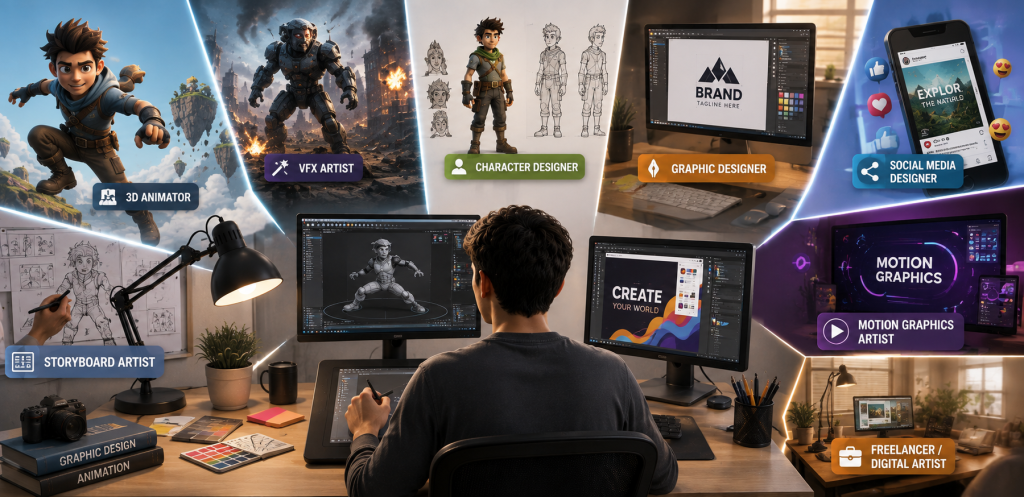
Graduates with a hybrid skillset typically move into one of these directions:
- Motion graphic designer — creating animated content for brands, ad agencies, and social media teams.
- Junior 2D/3D animator — entry point into film, gaming, or OTT production pipelines.
- UI/UX and interaction designer — since micro-animations are now standard in app and web interfaces.
- Freelance visual content creator — building brand kits, reels, and explainer videos for multiple clients.
- In-house creative executive — a common role at Kolkata-based startups and marketing agencies that need one person to handle both static and moving brand assets.
A common misconception is that hybrid training only leads to generalist, lower-paying roles. In practice, many studios pay a premium for designers who can also animate, because it reduces the number of people needed on a small production team. What determines your salary isn’t the breadth of your training — it’s the depth of your portfolio in whichever direction you ultimately specialise after graduating.
How to Choose the Right Institute in Kolkata
Kolkata’s creative training market has grown alongside the wider industry, but not every institute delivers on its promises. Before enrolling, check for these specifics:
Placement transparency. Ask for actual placement data — company names, roles, and approximate salary ranges — rather than a vague “100% placement assistance” claim.
Faculty with industry background. Instructors who have worked on real studio projects teach production discipline that classroom-only trainers usually can’t.
Software access and lab hours. Confirm that students get hands-on lab time with licensed software, not just demo versions or shared systems.
Live projects, not just tutorials. Programs that include client-style briefs (even simulated ones) prepare students far better than courses built entirely around following along with pre-recorded tutorials.
Moople Institute structures its graphic design and animation courses around this exact framework — industry-experienced faculty, hands-on lab access, and live-brief projects — because these are the factors that most directly affect a graduate’s job readiness, not just their certificate.
👉 Know More: How to Choose the Right Animation Course in Kolkata After 12th
Common Mistakes Students Make
Chasing software fluency instead of fundamentals. Knowing every button in After Effects means little if the underlying composition is weak. Employers notice the difference immediately in a portfolio review.
Ignoring the business side of freelancing. Many graduates plan to freelance but never learn client communication, pricing, or contracts — skills that are just as important as the creative work itself.
Comparing course fees without comparing curriculum depth. A cheaper course that skips 3D fundamentals or live projects often costs more in the long run through extra certifications or slower job placement.
Building a portfolio too late. Waiting until the final month of the course to start a portfolio results in rushed, inconsistent work. Portfolio building should start from the first completed project, not the last week of class.
Course Duration, Structure, and Fees
Most combined animation and graphic design programs in India run between 6 and 18 months, depending on depth and whether 3D modules are included. Shorter certificate courses (3–6 months) tend to cover only design fundamentals or only 2D animation basics, not both in meaningful depth.
Here’s a quick snapshot of what to expect:
- Certificate programs (3–6 months): Best for a quick skill boost or a working professional adding motion skills to an existing design background.
- Diploma programs (12–18 months): The standard path for students building a career from scratch, covering design, 2D/3D animation, and portfolio development.
- Advanced/specialisation tracks (post-diploma): For students who want to go deeper into VFX, character animation, or UI motion design after completing foundational training.
If cost is a major factor in your decision — and for most 18-to-25-year-old students in Kolkata, it is — it’s worth comparing a complete graphic design course against a combined program to see which fits your budget and career timeline better. Graphic design courses fees in Kolkata generally vary based on software licensing, batch size, and whether the program includes 3D animation modules, so always ask for a fee breakdown rather than a single lump-sum number.
Tips for Building a Portfolio That Gets You Hired

A strong portfolio for a hybrid skillset should show range without looking unfocused. Aim for 6–10 projects that clearly demonstrate both static design work (branding, layouts) and motion work (short animations, motion graphics), rather than twenty rushed pieces.
Include at least one project that combines both skills directly — for example, a full brand identity followed by an animated version of that same brand’s logo or social content. This single project does more to prove versatility than five separate, unrelated pieces.
Finally, treat your portfolio as a living document. Replace your weakest piece every few months with something stronger. Studios reviewing applications can tell the difference between a portfolio built once for graduation and one that’s actively maintained.
Frequently Asked Questions
1. Is an animation and graphic design course better than choosing just one specialisation?
It depends on your goals. A combined course offers more flexibility and is well-suited to freelancers, startups, and students who haven’t picked a specific role yet. A single-focus course is better if you already know you want a narrow, specialised role at a large studio.
2. How long does an animation and graphic design training program usually take?
Most diploma-level programs run between 12 and 18 months, while shorter certificate courses covering fewer topics can take 3 to 6 months.
3. Do I need a design background before starting this course?
No. Most animation and graphic design institutes start with design fundamentals — colour theory, typography, and layout — before introducing animation software, so beginners can join without prior experience.
4. What software will I learn in an animation and graphic design class?
Typical tools include Adobe Photoshop, Illustrator, and InDesign for design, along with After Effects for motion graphics and Blender or Maya for 3D animation, depending on the course level.
5. Can I freelance after completing a combined animation and graphic design course?
Yes, many graduates freelance successfully, but it’s important to also learn client communication and project pricing, not just the creative software, to sustain freelance work long-term.
6. How much do graphic design courses fees in Kolkata typically range?
Fees vary depending on course duration, software licensing, and whether 3D animation is included, so it’s best to request a detailed fee breakdown from each institute rather than comparing headline prices alone.
Conclusion
Choosing between a combined skillset and single-discipline specialisation isn’t about which path is objectively superior — it’s about matching your training to the kind of creative career you actually want. For most students exploring this field for the first time, an animation and graphic design course offers the flexibility to test both disciplines, build a broader portfolio, and stay competitive as studios increasingly hire for versatility rather than narrow specialisation.
What matters most isn’t the label on your certificate — it’s whether your training includes real fundamentals, hands-on software time, and live-style projects that mirror actual industry work. Take the time to compare curriculums, ask institutes for transparent placement data, and start building your portfolio from day one rather than waiting until graduation.
If you’re based in Kolkata and weighing your options, sit down with an academic counsellor before enrolling anywhere. Ask direct questions about faculty experience, lab access, live projects, and placement history — a program that welcomes those questions is usually one worth trusting. Book a free counselling session with Moople Institute to walk through the curriculum, see student portfolios, and get a clear, honest picture of what a career in animation and graphic design could look like for you.