Choosing the right career after Class 12 can feel overwhelming. Many students want a profession that combines creativity, technology, and strong job opportunities. If you enjoy movies, gaming, animation, visual storytelling, or digital art, an Animation Course after 12th or a VFX Course after 12th can be an excellent career path.
The entertainment and digital media industry is growing rapidly. From blockbuster films and OTT platforms to gaming studios and advertising agencies, skilled animation and VFX professionals are in high demand. This guide will help students and parents understand career opportunities, course benefits, skills required, salary expectations, and how to choose the right program after Class 12.
Why Choose an Animation And VFX Course After 12th?
An Animation and VFX Course after 12th can open doors to a rapidly growing creative industry. Animation Course after 12th and VFX Course after 12th have revolutionized storytelling across films, television, gaming, advertising, and digital platforms. As demand for high-quality visual content continues to rise, companies actively seek skilled professionals who can create compelling characters, realistic visual effects, and immersive digital experiences.
According to the World Economic Forum’s Future of Jobs Report, creative and technology-based roles are expected to see significant growth as digital industries continue expanding. Additionally, the gaming and media sectors are creating thousands of new opportunities worldwide.
Students who pursue animation and VFX training gain both artistic and technical skills, making them valuable in multiple industries.
Benefits of Choosing Animation and VFX
- Creative and rewarding career opportunities
- Growing demand across the entertainment and gaming industries
- Opportunities to work on films, web series, advertisements, and games
- Global career prospects
- Freelancing and remote work possibilities
- Portfolio-based industry where skills matter significantly
What Is Animation?
Animation is the process of creating moving images from illustrations, models, or digital assets. Animators bring characters, environments, and stories to life using specialized software and creative techniques.
An Animation Course typically teaches:
- Principles of animation
- Character design
- Storyboarding
- 2D animation
- 3D animation
- Motion graphics
- Digital sculpting
- Rendering techniques
Animation professionals work in movies, television, gaming, education, advertising, and digital marketing.
What Is VFX?
Visual Effects (VFX) involve creating or enhancing imagery that cannot be captured during live filming. VFX artists combine computer-generated elements with real footage to create stunning visual experiences.
A VFX Course usually covers:
- Compositing
- Motion tracking
- Green screen techniques
- Digital matte painting
- Rotoscoping
- Lighting and rendering
- Simulation effects
- Visual compositing software
VFX plays a critical role in modern films, OTT content, commercials, and video games.
Eligibility for Animation and VFX Courses After 12th
One of the biggest advantages of these programs is accessibility.
Basic Eligibility
- Completion of Class 12 from a recognized board
- Students from any stream (Science, Commerce, or Arts) can apply
- No advanced coding knowledge required
- Basic creativity and computer skills are beneficial
Many institutes focus on aptitude, creativity, and willingness to learn rather than academic background.
Skills Needed to Succeed in Animation and VFX
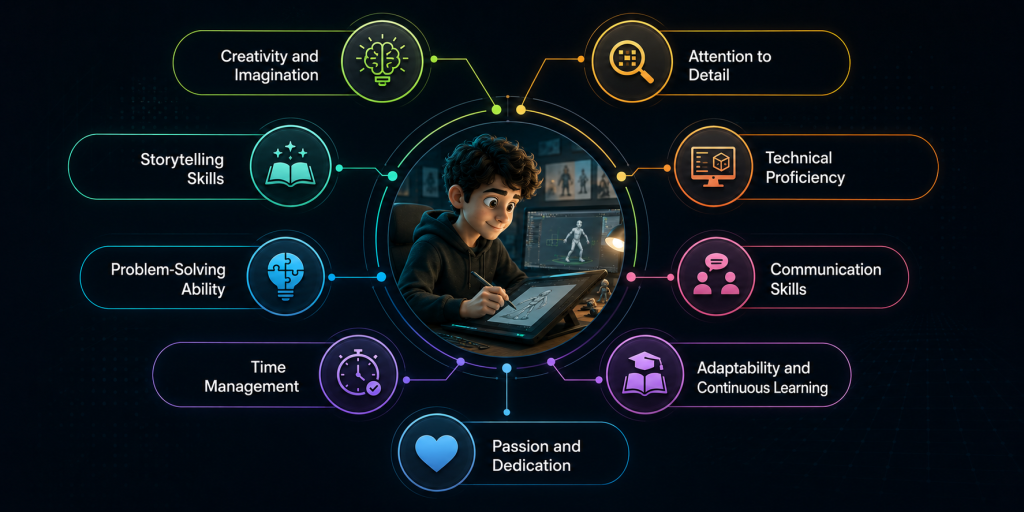
Building a successful career in Animation and VFX Course after 12th requires more than just technical knowledge. Professionals in this industry must combine creativity, artistic vision, and problem-solving abilities to create engaging visual experiences. Developing the right skills can help students stand out in a competitive job market and achieve long-term career growth.
Creativity and Imagination
Creativity is the foundation of Animation Course after 12th and VFX Course after 12th. Artists need to think outside the box to design unique characters, environments, and visual effects that capture the audience’s attention.
Attention to Detail
Every frame matters in animation and VFX production. Paying close attention to details such as movement, lighting, textures, and timing helps create realistic and high-quality visual content.
Storytelling Skills
Great animation and visual effects support a compelling story. Understanding how to communicate emotions, actions, and narratives through visuals helps artists create more impactful content.
Technical Proficiency
Animation and VFX professionals must be comfortable using industry-standard software and tools. Learning technical workflows improves efficiency and enables artists to produce professional-quality projects.
Problem-Solving Ability
Production challenges are common in animation and VFX projects. Strong problem-solving skills help artists overcome technical issues, optimize workflows, and deliver projects on time.
Communication Skills
Animation and VFX projects often involve collaboration between designers, animators, editors, and directors. Effective communication ensures smooth teamwork and successful project execution.
Time Management
Meeting deadlines is crucial in the creative industry. Good time-management skills help professionals handle multiple tasks, maintain productivity, and deliver quality work within project timelines.
Adaptability and Continuous Learning
Technology and industry trends evolve rapidly. Successful professionals stay updated with new software, tools, and techniques to remain competitive and relevant in the industry.
Passion and Dedication
A genuine passion for animation, visual storytelling, and digital creativity motivates artists to continuously improve their skills and achieve professional success.
Career Opportunities After Animation and VFX Courses
Animation Course after 12th and VFX Course after 12th training can lead to a wide range of career paths across multiple industries. Graduates can work as animators, VFX artists, compositors, motion graphics designers, game artists, and creative professionals in digital media production.
The demand for skilled professionals continues to grow across various industries.
Popular Animation Careers
- 2D Animator
- 3D Animator
- Character Animator
- Storyboard Artist
- Motion Graphics Designer
- Lighting Artist
- Rendering Artist
- Animation Director
Popular VFX Careers
- Compositor
- Roto Artist
- Matchmove Artist
- VFX Artist
- Effects Artist
- Matte Painter
- Tracking Artist
- VFX Supervisor
Emerging Career Paths
- Game Artist
- AR/VR Designer
- Virtual Production Artist
- Metaverse Content Creator
- Digital Content Creator
Industries Hiring Animation and VFX Professionals
Animation and VFX professionals are no longer limited to the film industry. With the rapid growth of digital content, gaming, online education, and immersive technologies, skilled artists are in demand across various sectors. Students who complete an Animation Course after 12th and VFX Course after 12th can explore diverse career opportunities in both creative and technology-driven industries.
Film and Entertainment Industry
The film and entertainment sector is one of the largest employers of animation and VFX professionals. Artists work on movies, television shows, web series, and OTT content to create realistic visual effects, animated sequences, and engaging storytelling experiences.
Gaming Industry
Video game companies require animators, 3D artists, and VFX specialists to create characters, environments, and special effects. With the global gaming market expanding rapidly, this industry offers exciting career opportunities for creative professionals.
Advertising and Digital Marketing
Brands use animation and visual effects to create eye-catching advertisements, social media campaigns, and promotional videos. Animation helps businesses communicate their messages effectively and engage their target audience.
OTT and Streaming Platforms
The increasing popularity of streaming platforms has created a growing demand for high-quality visual content. Animation and VFX professionals contribute to original series, films, trailers, and digital productions for online audiences.
Education and E-Learning
Educational institutions and e-learning companies use animated videos and interactive content to simplify complex topics. Animation makes learning more engaging and helps improve student understanding and retention.
Architecture and Real Estate
Architectural visualization studios hire animation professionals to create 3D walkthroughs, building simulations, and realistic project presentations. These visualizations help clients understand designs before construction begins.
AR and VR Industry
Augmented Reality (AR) and Virtual Reality (VR) companies need skilled artists to develop immersive digital experiences. Animation and VFX play a key role in creating realistic virtual environments and interactive applications.
Corporate and Business Sector
Many organizations use animated explainer videos, training modules, and presentation graphics for employee training and business communication. Animation helps companies deliver information more engagingly.
Social Media and Content Creation
Content creators, influencers, and media agencies increasingly rely on animation and VFX to produce engaging videos for platforms such as YouTube, Instagram, and other digital channels. This field offers excellent opportunities for freelancers and entrepreneurs.
Medical and Scientific Visualization
Healthcare and research organizations use animation to explain medical procedures, scientific concepts, and technical processes. This specialized field combines creativity with educational and scientific communication.
Salary Expectations After Completing the Course
Salary packages in animation and VFX depend on skills, portfolio quality, experience, and specialization. As professionals gain expertise and work on larger projects, their earning potential increases significantly.
Salaries vary depending on skills, specialization, location, and portfolio quality.
Entry-Level Roles: Freshers may earn approximately ₹2.5–5 lakh per annum.
Mid-Level Professionals: With experience and a strong portfolio, professionals can earn ₹5–10 lakh per annum or more.
Senior-Level Experts: Specialized artists, supervisors, and creative directors can command significantly higher compensation.
Freelancers and international remote workers may also achieve higher earning potential based on project requirements.
How to Choose the Right Animation and VFX Institute
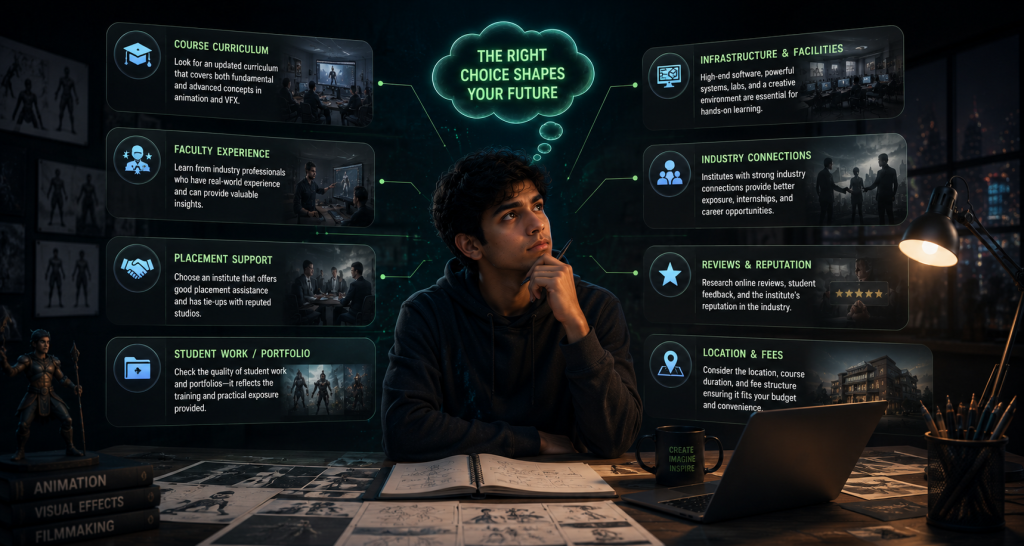
Selecting the right Animation and VFX institute is an important step toward building a successful creative career. With many training centers available, students should carefully evaluate factors such as curriculum quality, industry exposure, faculty expertise, placement support, and practical learning opportunities. Choosing an institute that focuses on both technical skills and real-world project experience can help students gain a competitive edge in the industry.
Key Factors to Consider
Industry-Relevant Curriculum
Look for an institute that regularly updates its syllabus according to current animation and VFX industry trends. A well-structured curriculum should cover 2D animation, 3D animation, visual effects, motion graphics, compositing, and industry-standard software.
Experienced Faculty
Learning from industry professionals can make a significant difference in skill development. Experienced mentors provide practical insights, guidance, and knowledge based on real production workflows.
Hands-On Training and Live Projects
Practical learning is essential in animation and VFX. Choose an institute that offers project-based training, workshops, and opportunities to work on real-world assignments to build confidence and technical expertise.
Placement Assistance
A good institute should provide career support through placement drives, portfolio development, interview preparation, and industry networking opportunities to help students secure jobs after course completion.
Modern Infrastructure and Software
Ensure the institute provides access to advanced computer labs, high-performance workstations, and industry-standard tools such as Autodesk Maya, Blender, Adobe After Effects, Nuke, and Houdini.
Student Portfolio Development
A strong portfolio is crucial for landing jobs in animation and VFX. The right institute should help students create professional-quality projects that showcase their creativity and technical abilities.
Industry Exposure
Guest lectures, seminars, studio visits, and interaction with industry experts can provide valuable insights into current market demands and career opportunities.
Why Consider Moople Institute?
Moople Institute is recognized for its industry-focused training programs in Animation, VFX, Gaming, and Multimedia. The institute emphasizes practical learning, portfolio development, expert mentorship, and placement support. With modern infrastructure and exposure to industry-standard software, students gain the skills needed to pursue careers in animation, visual effects, gaming, and digital content creation.
Choosing the right institute can significantly impact your learning experience and career growth. Take time to compare programs, visit campuses, review student work, and select an institute that aligns with your career goals.
Future Scope of Animation and VFX
The future looks highly promising for Animation Course after 12th and VFX Course after 12th professionals. Streaming platforms, gaming companies, advertising agencies, and digital content creators continue investing heavily in visual storytelling.
Technologies such as Artificial Intelligence, Virtual Reality (VR), Augmented Reality (AR), and virtual production are creating new opportunities for skilled artists. As demand for digital content increases, professionals with specialized animation and VFX skills are expected to remain highly valuable.
Tips for Students Starting Their Animation Journey
Beginning a career in animation requires dedication, creativity, and continuous practice. Building a strong portfolio, mastering industry software, and staying updated with industry trends can help students stand out in a competitive job market.
Build a Strong Portfolio: Employers often prioritize portfolios over academic marks.
Practice Daily: Consistent practice improves artistic and technical abilities.
Learn Industry Software: Become proficient in tools commonly used in production environments.
Follow Industry Trends: Stay updated with evolving technologies and techniques.
Network with Professionals: Industry connections can lead to internships and job opportunities.
FAQs
1. Can I join an Animation Course after 12th from any stream?
Yes. Students from Science, Commerce, and Arts backgrounds can pursue animation courses after completing Class 12.
2. Is a VFX Course after 12th a good career option?
Yes. VFX professionals are in demand across films, gaming, advertising, OTT platforms, and digital media industries.
3. What is the duration of animation and VFX courses?
Depending on the program, course duration can range from 6 months to 3 years.
4. Do I need drawing skills for animation?
Basic drawing skills can help, but many modern animation roles focus more on digital tools and creativity.
5. What is the average starting salary after completing the course?
Freshers typically earn between ₹2.5 lakh and ₹5 lakh annually, depending on skills, portfolio, and employer.
Conclusion
A career in animation and VFX offers the perfect blend of creativity, technology, and professional growth. Whether your goal is to work in films, gaming, advertising, or digital media, enrolling in an Animation Course after 12th or a VFX Course after 12th can help you build the skills needed for success.
The industry continues to expand, creating exciting opportunities for talented professionals. If you are passionate about storytelling, design, and visual creativity, now is the ideal time to explore animation and VFX education and take the first step toward a rewarding career.